
Print-on-demand sounds like a pretty good idea. You create a design, put it on a product, and when someone orders it, another company prints and ships it.
You don't need a warehouse full of merchandise, and you don't have to spend thousands of dollars buying inventory before you've made your first sale.
But is it really that simple?
Print-on-demand has definite advantages, especially for someone starting a small business. It also has disadvantages that aren't always obvious until you start working with it.
Let's look at both sides.
First, What Exactly Is Print-on-Demand?
Print-on-demand, often called POD, is a way to sell products printed only after someone orders them.
For example, a business might offer journals, mugs, T-shirts, or other items with its own designs. Instead of purchasing hundreds of finished products in advance, the business works with a print-on-demand company that prints each item as orders come in.
The printing company usually handles packaging and shipping.
That covers much of the production process, but the business owner is still responsible for choosing products, creating or arranging designs, setting prices, marketing, and helping customers when something goes wrong.
The Advantages of Print-on-Demand

1. You Don't Have to Purchase Inventory in Advance
This is probably the biggest advantage.
In a traditional retail business, you might have to buy 50 or 100 mugs before you know whether anyone wants them.
With print-on-demand, you can sell those mugs without buying them ahead of time. When someone orders one, the printing company produces it.
That means you won't be left with boxes of unsold merchandise if a design doesn't sell.
You still have expenses, but you can avoid one of the biggest financial risks of starting a product-based business.
2. You Can Start With a Smaller Budget
Because you don't have to stock inventory, getting started can cost considerably less.
You may still need to pay for a website, design software, product samples, advertising, and other business expenses.
But you don't necessarily need a large amount of money to get your first products ready for sale.
For someone who wants to start small and see how things go, that's a real advantage.
3. You Can Offer a Variety of Products
One nice thing about print-on-demand is the wide range of products available.
You might start with journals and mugs, then decide to try jewelry dishes, tote bags, or T-shirts.
You can also experiment with different designs without committing to a large inventory of each one.
That flexibility makes it easier to learn what customers want.
Of course, just because a product is available doesn't mean you should automatically add it to your store. Quality, price, and how well the product fits your business still matter.
4. It's Well Suited for Personalized Products
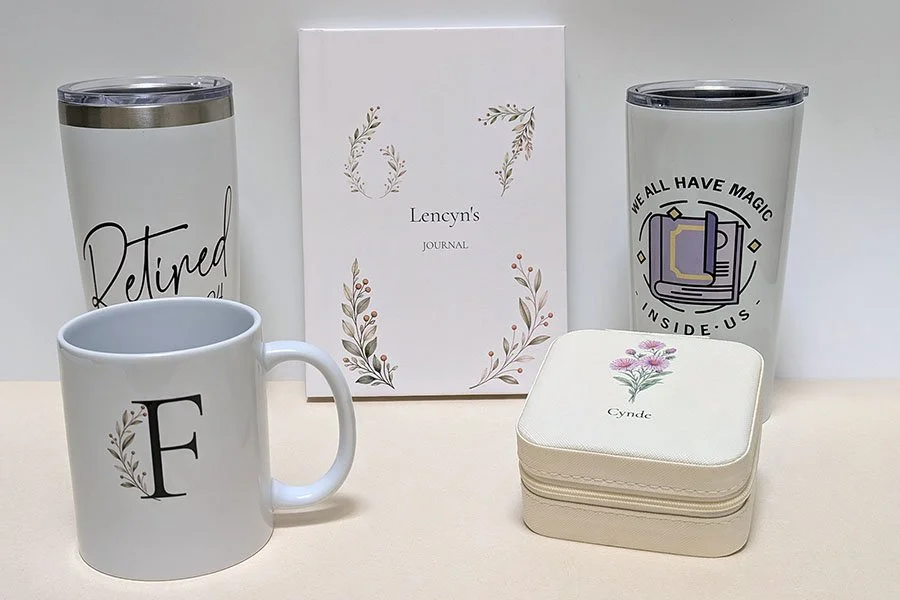
Print-on-demand works especially well for products that include names, dates, photographs, or other personal details.
Think about a journal with someone's name on the cover or a mug made to remember a beloved pet.
Each order can be different, so producing one item at a time makes sense.
For small businesses that specialize in personalized gifts, this is one of Print-on-demand's most useful features.
5. You Don't Have to Handle Printing and Shipping Yourself
Imagine buying blank mugs, printing the designs, packaging each order, and taking everything to the post office.
For some businesses, that works just fine. But not everyone has the equipment, space, or time.
With print-on-demand, the production company handles much of that work.
That gives the business owner more time to work on product ideas, website improvements, customer service, and marketing.
It doesn't eliminate the work of running a business, but it removes some day-to-day responsibilities.
6. You Can Test New Ideas Without a Large Commitment
Suppose you have an idea for a journal design but aren't sure whether people will like it.
With print-on-demand, you can create the product, order a sample, and see how it looks before deciding whether to sell it.
If the design doesn't turn out the way you expected, you can make changes.
If you eventually find customers aren't interested, you can remove the product without being stuck with unsold inventory.
That makes experimenting with new ideas a lot less risky
The Disadvantages of Print-on-Demand
As convenient as print-on-demand can be, there are some drawbacks worth understanding.
1. Your Profit Margin May Be Smaller

When products are made one at a time, production costs are often higher than if you ordered hundreds of the same item.
That affects how much profit you can make.
For example, suppose you sell a mug for $20. If the printing company charges $10 to produce it and $5 to ship it, you're left with $5 before payment processing fees, advertising, and other business expenses.
That $5 isn't necessarily your profit.
It's easy to look at the difference between the selling price and the production cost and think you're making more money than you actually are.
Pricing takes some careful thought.
2. You Have Less Control Over Product Quality
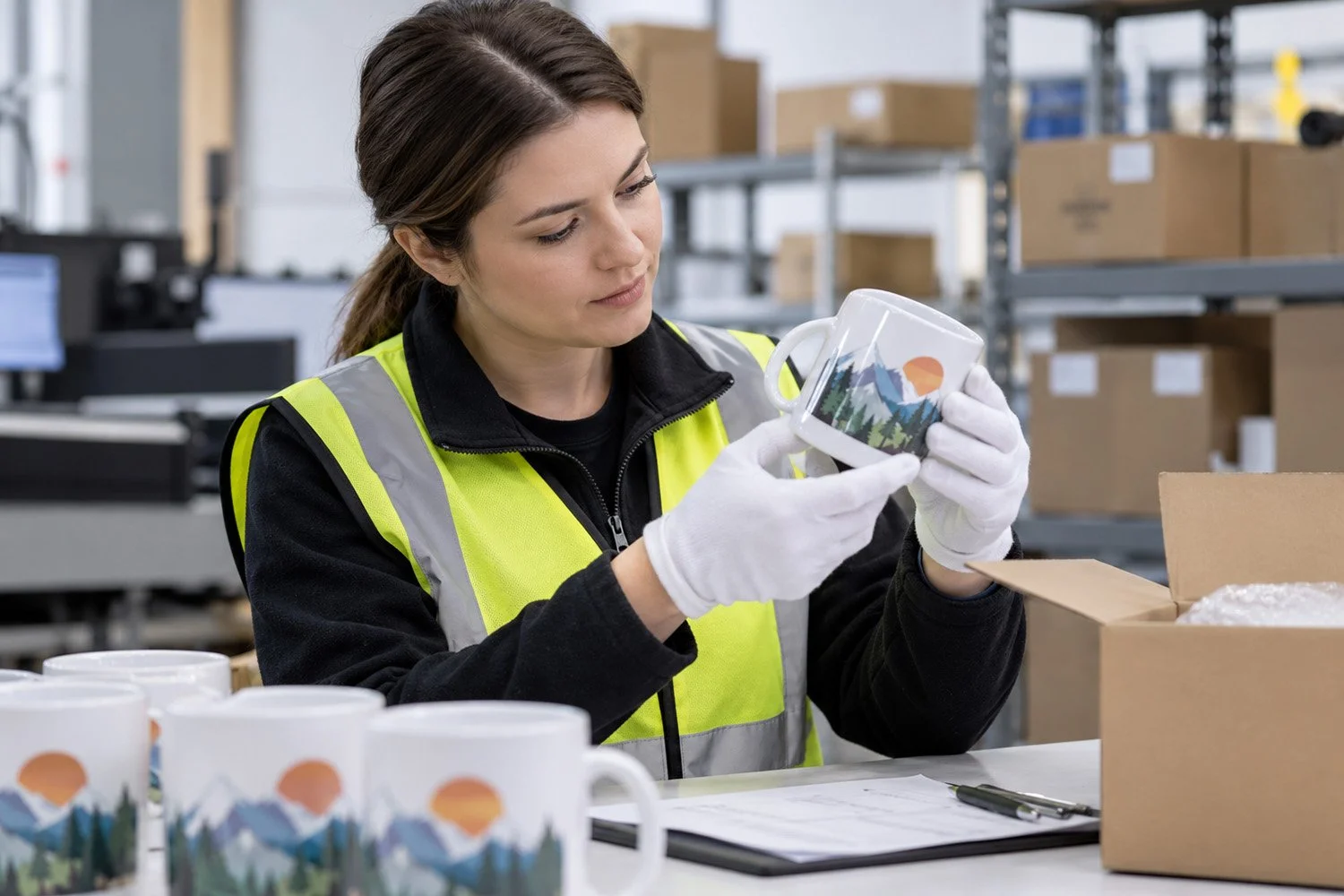
This is one of the disadvantages that concerns us most at Lencyn.
When another company manufactures and prints your products, you depend on them to do the job correctly.
A design might look wonderful on your computer screen but turn out differently on the finished product.
Colors may not match what you expected. Printing might be slightly off-center. Or the product itself might not have the quality or feel you were hoping for.
That's one reason we order samples of selected products before adding them to our store.
We've found that some products look much better in photos than they do in person.
Occasionally, a sample tells us a product simply doesn't meet our expectations, so it doesn't make it into our store.
3. Production and Shipping Can Take Longer
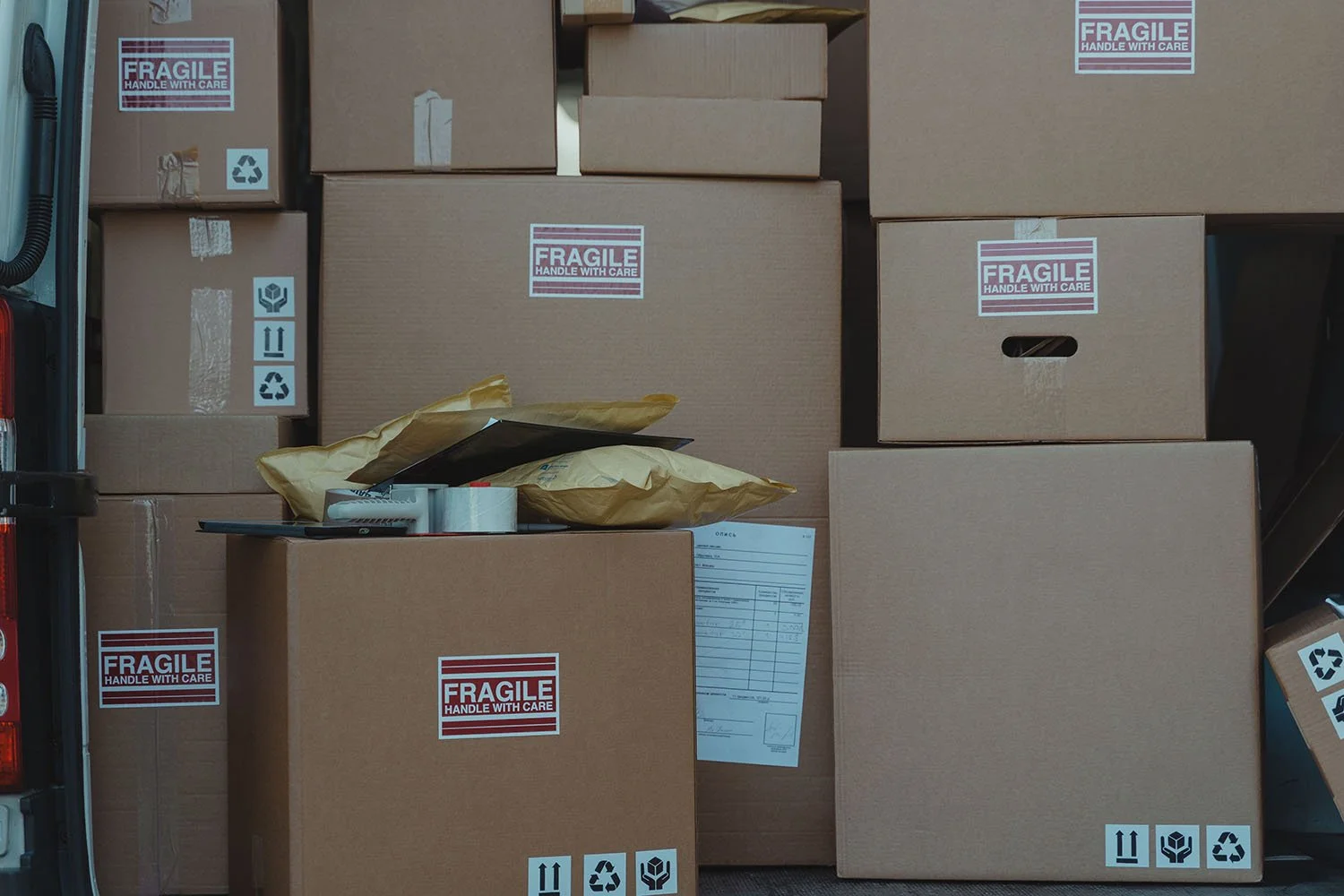
When you order something from a traditional retailer, the finished product may already be sitting in a warehouse, ready to ship.
Print-on-demand is different.
The product is usually printed after you place the order. Only then can it be packaged and shipped.
That adds production time before shipping even begins.
During busy periods, such as the holiday season, production can sometimes take longer than usual.
For customers who need a gift by a certain date, those extra days can make a difference.
4. You Depend on Another Company
When you use a print-on-demand service, you're relying on that company for production, inventory availability, and shipping.
If a particular product becomes unavailable, you may have to temporarily remove it from your store or find an alternative.
If a printing machine breaks down or a production facility gets backed up, orders may be delayed.
If a customer receives a damaged or incorrectly printed product, they'll usually contact you, even though you didn't manufacture it.
You can work with a reliable production company, but you still won't control everything.
5. Not Every Product Has the Same Quality
It's tempting to assume that if a print-on-demand company offers a product, it must suit your store.
Unfortunately, that's not always the case.
Two products that look similar in online photographs can be very different in person.
A pouch might have thinner material than expected. A mug might have a print that looks too small. A journal cover might feel different from what you imagined.
Sometimes the printing is perfectly fine, but the product itself isn't what you want to sell.
That's why product selection matters as much as the designs you put on them.
6. Customization Has Its Limits
Although print-on-demand is a good option for personalized products, it doesn't mean you can customize everything.
Each production company has its own printing areas, product sizes, color options, and personalization capabilities.
You may discover that a design can't be printed exactly where you want it, or that the personalization options aren't flexible enough for a particular idea.
Sometimes you have to adjust your design to fit the product, not the other way around.
7. Getting Customers Is Still Your Responsibility
This is easy to overlook when people talk about starting a print-on-demand business.
Creating a product and putting it on a website doesn't mean people will automatically find it.
You still have to give potential customers a reason to visit your store.
That might involve social media, SEO, advertising, blogging, or other marketing efforts.
And even when people visit your website, there's no guarantee they'll purchase anything.
Print-on-demand makes it easier to offer products without holding inventory. It doesn't make finding customers easy.
So, Is Print-on-Demand Worth It?
That depends on what you're hoping to accomplish.
If you want to start a small business without investing heavily in inventory, print-on-demand can be a practical option.
It also suits people who enjoy creating designs, offering personalized products, or experimenting with new ideas.
But it's important to understand what you're getting into.
You may have smaller profit margins, less control over production, and occasional problems with product quality or shipping.
Like any other business, it takes time and effort to build something customers want.
Our Experience at Lencyn
At Lencyn, print-on-demand lets us offer personalized gifts without manufacturing or storing products ourselves.
We like being able to try new ideas, explore different products, and make changes without committing to large inventory quantities.
But we've also learned not to rely entirely on product photographs or descriptions.
A sample can reveal things that aren't obvious on a computer screen, and sometimes the best decision is not to offer a particular product at all.
For us, print-on-demand isn't about adding as many products as possible. It's about finding products we're comfortable offering to our customers.
Final Thoughts
Print-on-demand lets small businesses sell products without many of the expenses and complications that come with traditional retail.
That's a significant advantage.
But there are trade-offs, and it's worth knowing them before you jump in.
Understand what print-on-demand can and can't do, take your time choosing products, and remember that even though another company handles printing and shipping, your customers are buying from you. If something goes wrong with an order, they'll be looking to you for help.
Print-on-demand can handle manufacturing and fulfillment.
Building a business that people trust is still up to you.
Visit Our LencynVibes Shop
Want to see some of the products we offer? Visit LencynVibes.