Starting a print-on-demand business is easier than many traditional businesses. You can choose products, add your designs, set up an online store, and start selling without buying inventory in advance.
But getting your business noticed is another story.
Thousands of print-on-demand sellers offer mugs, T-shirts, journals, tote bags, and other products. Many even use the same printing companies and sell identical blank products.
So how do you stand out?
One important part of the answer is building a brand that customers recognize, remember, and trust.
Branding is much more than creating a logo.
What Does Branding Actually Mean?
When people hear the word branding, they often think of a business name, logo, or color scheme. Those things are important, but they're only part of it.
Your brand is also the impression people have of your business.
It's what customers think about when they see your products, visit your website, read your descriptions, or receive an order.
Think about businesses you recognize immediately. You may remember their logos or colors, but you probably also associate them with certain products, quality, prices, or customer experiences.
That's what a strong brand can do.
For a small print-on-demand business, the goal isn't necessarily to become a household name. It's to create an identity that helps the right customers recognize your store and feel comfortable buying from it.
1. Know What You Want Your Business to Be Known For
Before you spend too much time designing a logo or choosing website colors, think about the kind of business you want to build.
Do you want to sell funny gifts? Personalized keepsakes? Pet-related products? Inspirational designs? Products for a particular hobby or profession?
There's no rule saying you must sell only one type of product. However, having some connection between your products can make your store easier for customers to understand.
For example, a store selling personalized journals, memorial mugs, and custom jewelry dishes might build its identity around meaningful gifts and personal memories.
The products are different, but they share a common purpose.
Compare that with a store selling unrelated designs across dozens of products without any clear theme. Customers may find something they like, but they might have a harder time remembering what the business is known for.
Start by asking yourself one question: What do I want people to remember about my store?
Your answer can help guide future product choices, designs, and marketing.
2. Give Your Business a Consistent Appearance
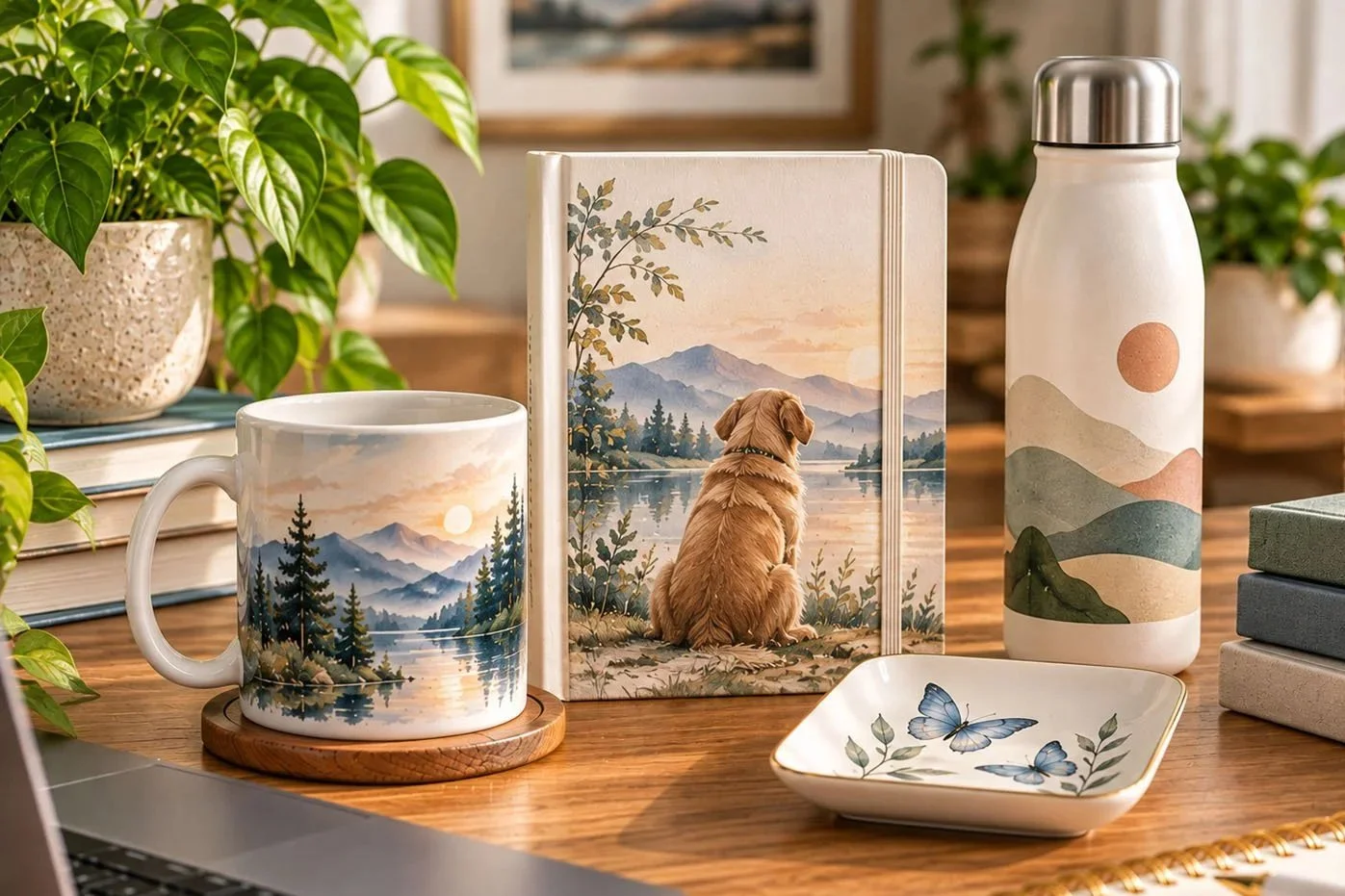
Your logo, colors, fonts, and photographs all help people recognize your business.
You don't need an expensive logo or a professionally designed website to get started. What matters more is using your visual elements consistently.
For example, if your website looks simple and elegant, using wildly different colors and graphic styles in every advertisement might make your business feel disconnected.
Try to keep a familiar look across your:
Website and product pages
Social media posts and Pinterest pins
Product photographs
Marketing materials
Packaging or printed inserts, when available
That doesn't mean everything must look identical. Different products may call for different designs, especially when you're selling to different audiences.
The important thing is that customers can still recognize the business behind them.
Over time, familiar colors, fonts, and photography styles can help people associate what they see with your store.
3. Offer Products That Give Customers a Reason to Choose You
One challenge of print-on-demand is that sellers often have access to the same products.
A plain white mug from one print provider might be identical to the mug another seller uses.
The difference comes from what you put on that mug and how you present it.
Original design ideas, thoughtful personalization options, and products created for particular interests or occasions can help your business stand out.
For example, consider the difference between a mug with a common saying and one personalized with a pet's name as a memorial keepsake.
Both may use the same blank mug, but they offer customers very different experiences.
Of course, personalization isn't the only way to create something memorable. Humor, artistic style, unusual themes, or designs aimed at a specific audience can also make products appealing.
Offer something that makes your product stand out and give customers a reason to buy from you instead of another seller.
4. Don't Overlook Product Quality

You can spend weeks creating a beautiful website and attractive product designs. But if customers receive something that looks cheap or poorly made, all that work may not matter.
With print-on-demand, you're usually relying on another company to manufacture and ship your products.
That makes product testing especially important.
Whenever possible, order samples before adding new products to your store. Inspect the materials, print quality, colors, and overall construction.
Does the finished product look like the online mockup? Does it feel well-made? Would you be comfortable giving it to someone as a gift?
Sometimes a product looks impressive in promotional photos but disappoints in person.
You may also discover printing problems that weren't obvious on your computer screen.
Not every sample will meet your expectations, and that's part of the learning process. It's better to discover a problem yourself than have a customer discover it after paying for an order.
Remember, customers order from your business, not your print provider. They'll judge your store by the quality of the products they receive, regardless of who makes them.
5. Make Your Website Part of Your Brand
Your website does more than display products. It helps customers form an opinion about your business.
A confusing website, missing information, or poor-quality photographs can make visitors hesitate, even when they like what you're selling.
Try viewing your store from a new visitor's perspective.
Can they easily understand what you sell? Are the product descriptions clear? Can they find shipping information, return policies, and contact details?
If you sell personalized products, is it obvious how the personalization process works?
These details may seem small, but together they affect how professional and trustworthy your business appears.
You don't need dozens of pages or complicated features. A simple, organized website with clear information can work very well.
And don't forget about mobile visitors. Many people shop using their phones, so your website should be easy to navigate on a smaller screen.
6. Let Your Business Have Its Own Personality
Think about the way you want to communicate with customers.
Should your business sound playful and humorous? Warm and friendly? Elegant and sophisticated? Practical and simple?
The answer frequently depends on the products you're selling and the audience you're trying to reach.
A store specializing in funny T-shirts might use a completely different tone from one selling personalized memorial gifts.
Whatever approach you choose, try to keep it reasonably consistent throughout your website, emails, product descriptions, and social media posts.
You don't need to sound like a large corporation. In fact, one advantage of running a small business is that you can communicate more personally.
Write descriptions that sound natural. Explain things clearly. Avoid making promises you can't keep.
Customers should feel they're dealing with a real business that cares about what it sells.
7. Build Trust, Not Just Recognition
Getting people to recognize your business is one thing. Getting them to trust it is another.
Someone may remember your logo or see your products repeatedly on social media, but that doesn't automatically mean they'll feel comfortable placing an order.
Customers learn to trust your business when you deliver what you promise and treat them well.
Accurate descriptions, realistic product photographs, explicit policies, dependable service, and helpful communication all make a difference.
Mistakes and problems can happen, especially when another company handles production and shipping.
How you respond to those problems matters.
If an order arrives damaged or a customer has a legitimate concern, dealing with the case promptly and professionally can help protect your reputation.
You may not control every part of the production process, but you can control how you communicate with customers and handle their concerns.
8. Use Marketing to Help People Remember Your Brand
Marketing isn't only about getting someone to click on a product and buy immediately.
It also helps introduce your business to people who may not be ready to buy yet.
Someone might see one of your Pinterest pins, visit your website, and leave without purchasing anything. Weeks later, they might come across another product from your store.
If your branding is consistent, they may recognize the business from their earlier visit.
This is one reason to maintain a familiar appearance and message across your marketing.
Social media, Pinterest, blog posts, and other marketing channels can all help people discover your products.
However, simply posting more often doesn't guarantee results. The content still needs to be useful, interesting, or relevant to the people you're trying to reach.
If you'd like to explore this subject further, read our article Marketing a Print-on-Demand Business: What Does It Really Take?
9. Give Customers a Reason to Come Back
It's easy to concentrate on finding new customers while overlooking the people who have already purchased from you.
A satisfied customer may return for another birthday, holiday, or special occasion.
They might also recommend your store to a friend or family member.
Good service, dependable quality, and a pleasant shopping experience can all encourage repeat business.
Even something as simple as clear order information or easy personalization may leave a positive impression.
Not every customer will return, and not every purchase will lead to a recommendation.
But building a business people feel good about buying from gives you a better chance to build enduring customer relationships.
10. Be Patient and Let Your Brand Develop
A recognizable brand usually isn't created overnight.
In the beginning, you may experiment with different products, designs, photographs, and marketing approaches.
Some ideas will work better than others.
You might discover that customers are especially interested in one collection or that a particular design style receives more attention.
Use what you learn to improve your store.
At the same time, avoid changing your entire business identity every time something doesn't sell.
Customers need opportunities to become familiar with your business. Constantly changing your logo, colors, message, or overall direction can make that more difficult.
It's fine for your brand to evolve. Just make those changes thoughtfully, rather than starting over every few weeks.
Final Thoughts
Building a strong print-on-demand brand takes more than putting attractive designs on products.
It's about creating a business that people can recognize, understand, and trust.
Your products, website, photographs, customer service, and marketing all shape how people see your store.
You don't need a large advertising budget or hundreds of products to begin building that identity.
Start with a clear idea of what your business stands for. Choose products carefully, keep your presentation consistent, and focus on the customer experience.
Most importantly, remember that a strong brand isn't simply about getting noticed. It's about giving people a reason to remember your business and feel confident buying from it.
That takes time, but it's worth working toward.
Visit Our LencynVibes Shop
Want to see some of the products we offer? Visit LencynVibes.